Welcome to Dining Room Theology — where the coffee is strong, the Bibles are open, the conversation is lively, and apparently even the cat prays.
Our little group (the Spirit Sisters) gathers around the dining room table each week to study God’s Word, ask hard questions, laugh a lot, and encourage one another in faith.
Tonight, Chewy decided he would lead the closing prayer.
“Amen.” 😄
I’ve been having some fun and relaxing time with my AI program, and it created these cartoons of our Bible study. I hope you enjoy them! Laughter is good for all of us.
Yes, Chewy joins the Spirit Sisters regularly—every Monday, in fact. He seems to think he’s an official member of the group.
We go live every Monday evening on Facebook. Just head over, follow my page, and it will pop up in your Reels when we start.
Right now we’re live at 5:30 PM EST, but soon we’ll be moving to 6:30 PM.
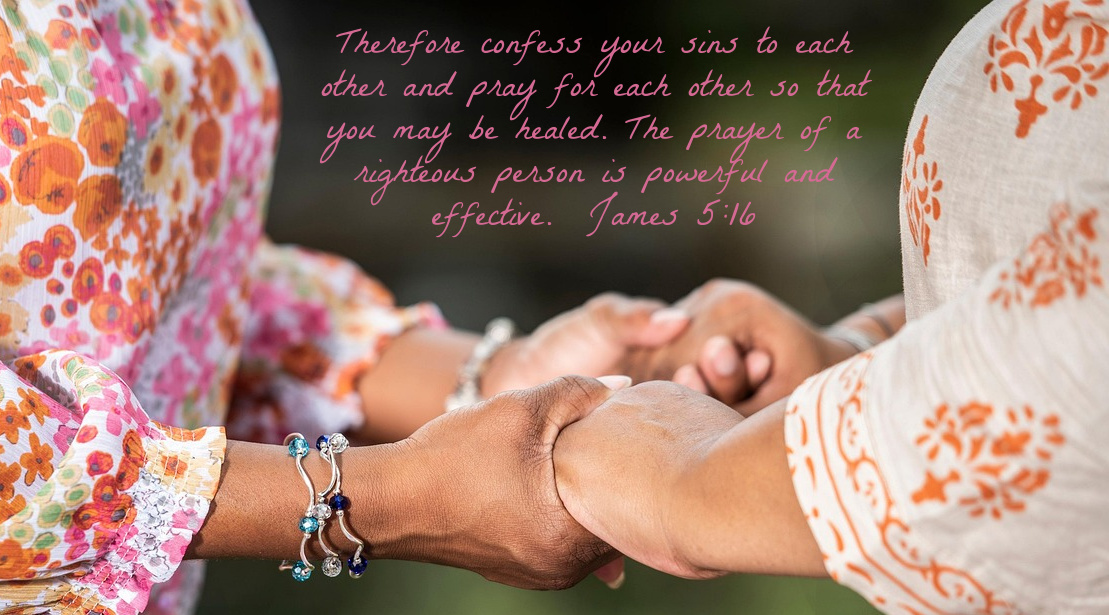
God wants to mend our hearts, minds, and souls. He wants to repair what’s broken in us. James 5:16 says we are to confess our sins and pray with one another. When we do this, we bring our deepest hurts into the light, and healing can begin. Praying then becomes an act of restoration that allows God to begin the mending process.
We are reminded in the same verse that healing doesn’t happen alone. As believers, we are to pray for one another. In doing so, God can use those prayers to heal any kind of brokenness, be that physical, emotional, or spiritual. Over time God renews and restores us fully.
The poem in the picture above is a Haiku. The simplicity of this Japanese poetic form has been an unexpected gift in my meditation and prayer time. It helps me clear my scattered thoughts and focus on a specific word of God’s Word and applying it to my life.
For me this is a deliberate act of submission. It helps me take a broad and powerful truth from God’s Word and make it into a focused, crystal clear declaration.
When I rise from my quiet time to go on with the pleasures and pressures of the day my focus remains on what God has said to me in this sweet moment of clarity.
If you would like to use this in your own quiet time here is an outline:
A Haiku is a powerful little poem that helps clear your mind. It follows a strict 3-line structure: 5 syllables, 7 syllables, 5 syllables. We use this structure as a spiritual filter to capture God’s truth, not our own thoughts.
5 Steps To Creating Your Own Haiku
1. Find the Core Truth
Begin by reading and meditating on Scripture.
Goal: Pinpoint the single most impactful truth, command, or revelation the Holy Spirit is highlighting to you right now. This is your foundation.
It’s not about your feelings; it’s about His Word.
2. Distill to One Image
Take that spiritual truth and find one concrete image that represents it.
Goal: Give the abstract concept a visual form (e.g., ‘Grace’ becomes ‘shelter,’ ‘Forgiveness’ becomes ‘clean flowing water’).
Focus on the image that best clarifies God’s action or character.
3. Submit to the Structure
Using the 5-7-5 syllable constraint, draft your three lines.
Goal: Let the structure force you to select only the most precise, potent words.
This is an act of submission—letting the form strip away your own unnecessary words.
4. Bring Clarity to the Message
Ensure the lines connect but also create a moment of insight in the third line.
Goal: The last line should offer the spiritual conclusion, application, or humble response to the truth presented in the first two lines.
The final line should point the meaning back to His glory.
5. Pray and Act
Read the final haiku aloud slowly. Do not over-edit it.
Goal: Use the finished poem as a concise prayer.
Commit to letting this truth guide your action as you move from meditation into the world.
Jonah 1:1-3 Where or what is your Ninevah? Where or to what has God called you? Are you deliberately saying no to God? Is your allegiance or agenda focused on something or someone else?
Jonah was a true believer. Until the point of being told to go to Ninevah he had followed God in his life, career, and actions. But this was just too much. Jonah was loyally attached to his country and was more than willing to do and say whatever God wanted as long as it related to his own thoughts. God was saying, look, Jonah, Amos and Hosea are already doing a really good job of getting the job done in Jerusalem, I need you to go to Ninevah and get the job done there. Of course the rest of the story is really well-known. But…
What is our story? What is God calling/telling us to do that we are saying, look God, am I the only one who can do this particular thing right now, find someone else? Not to sound defeatist, but He does get what He wants. Will we be one of those who misses the blessings of obedience because the call is more than we can handle?
Look at Proverbs 3:5-6. When we take the time to honor God and His Word, He directs us in the way we should go. He does not give us directions to do things He can’t handle, but He wants us to know Him and follow through on what He wants of us.
Father in Heaven, Creator of all that was is and is to come, give me an all-consuming desire to know Your Word so well that in any life situation I know the path to take. I lift this prayer in the precious name of Jesus – make it so.




 Find the Core Truth
 Distill to One Image
 Submit to the Structure
 Bring Clarity to the Message
 Pray and Act


 A Satisfied Spirit